
 EN
EN
VFFS Machine:Sealing System Optimization for Sticky and High-Moisture Products
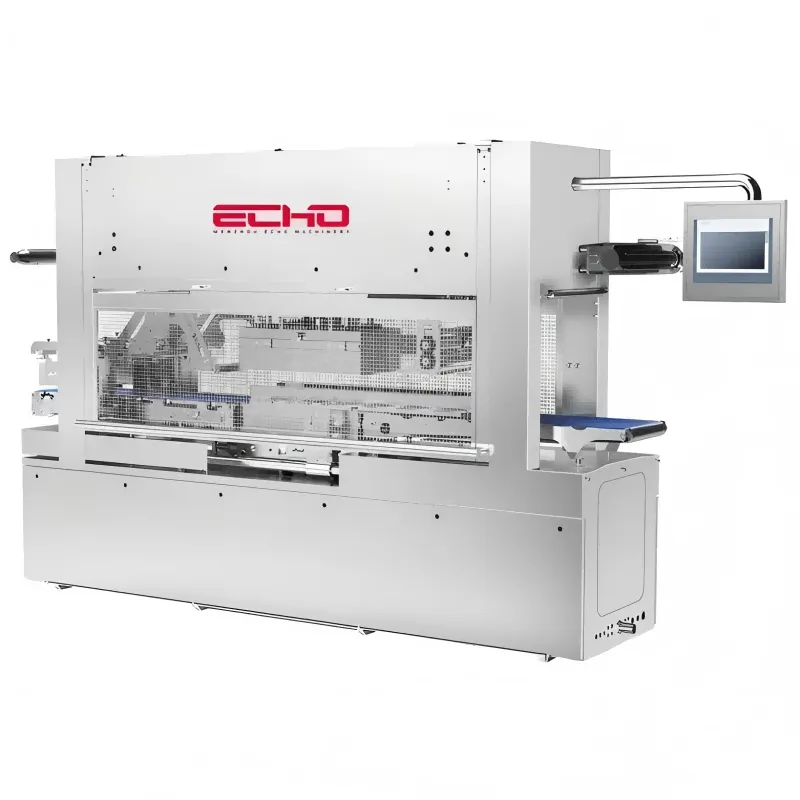
Fine-Tuning Seal Time, Temperature, and Pressure to Prevent Film Adhesion
To stop films from sticking during Vertical Form Fill Seal operations, getting the right balance of seal time, temperature, and pressure is absolutely essential. When there's too much heat, polymer layers tend to melt right into the sealing jaws. Not enough heat leads to weak seals that just won't hold and can leak all over the place. Pressure matters too - if it's not quite right, the layers might not fuse properly or worse, the packaging gets deformed. According to research published in Packaging Technology & Science back in 2021, even small temperature fluctuations beyond about plus or minus 5 degrees Celsius from what materials need can boost seal failures by around 34% when dealing with moist environments. Sugar based powders and other wet products work best with shorter contact times between half a second and one point two seconds while keeping temperatures moderate around 140 to 160 degrees Celsius. This helps prevent sticky residues building up on those hot parts. Combine these settings with Teflon coated sealing jaws and regular cleaning routines, and manufacturers see fewer problems with contamination and less production downtime overall.
Managing Film Coefficient of Friction (COF) in VFFS Applications
The coefficient of friction (COF) in films plays a big role in how consistently they handle within vertical form fill seal systems. When films have really low COF values below 0.2, they tend to slip around unpredictably inside those forming tubes which leads to all sorts of alignment problems. On the flip side, when COF goes above 0.5, there's way too much drag as the material moves vertically through the system. For products that are naturally sticky like syrups or pastes, manufacturers often turn to modified polyethylene films that contain slip agents such as erucamide. These special films keep the COF right around that sweet spot of 0.3 to 0.4 for best performance. Research on polymer adhesion shows something interesting too - humidity levels over 60% relative humidity can actually increase COF by about 22%. That's why many facilities install dehumidifiers specifically near those critical sealing areas. Getting the tension just right as the film unwinds needs to match up perfectly with the filler speed to avoid any stretching that might cause friction changes. Most experienced operators check their COF readings at least once a month following ASTM D1894 guidelines. They also spend time adjusting roller positions to find and fix those pesky drag spots where the film gets stuck. This attention to detail ensures everything runs smoothly without unexpected stops or quality issues down the line.
Precision Filling Solutions for Irregular, Granular, and Oily Products
Comparing Auger, Volumetric Cup, Piston, and Combination Weighers in VFFS Integration
Choosing the right filler machine for tricky or uneven products really comes down to how well it handles different viscosities, manages particles, and keeps up with production demands. Auger fillers work great for dry powdery stuff like spices or instant coffee because they use those spiral shaped screws to dispense exact amounts. For things like rice or nuts that are pretty consistent in size, volumetric cup systems tend to be better since they have these calibrated cups that measure out each portion accurately. When dealing with thick liquids such as oils, sauces, or pastes, piston fillers shine due to their positive displacement method which ensures precise measurements every time. And if speed matters most while maintaining accuracy, combination weighers take the cake. These machines can handle all sorts of mixed density products like trail mixes at incredible speeds, sometimes filling over 160 bags per minute.
Calibrating Fill Heads and Dosing Mechanisms for Consistent Irregular-Particle Handling
Getting accurate measurements for uneven products requires adjusting settings as conditions change instead of sticking to fixed parameters. Take those tricky cases where particles come in all different sizes like chopped nuts or frozen berries. Systems that can tweak auger speed in real time based on what the load sensors detect actually cut down on wasted product by around 4 percent according to Packaging Digest last year. For products that tend to stick, applying special coatings to nozzles makes a big difference. These hydrophobic surfaces keep residue from building up inside equipment, which means better filling results and fewer times technicians need to clean things out. Handling fragile items with odd shapes presents another challenge altogether. Operators should match how fast vibrations happen with the movement of packaging film so nothing gets crushed when dropping at high speeds. And don't forget about checking scales frequently with proper test weights, particularly whenever switching between different products. Regular verification helps stay within regulations while also preventing excessive filling that costs money.
Critical VFFS Machine Components That Influence Product Flow and Film Integrity
Forming Tube Design, Film Path Alignment, and Filling System Synchronization
There are three main factors that determine how reliable packaging is for tough products: the shape of the forming tubes, how accurately the film tracks along them, and whether the volume being filled matches up properly. Better shaped tubes create fewer spots where things get stuck and stop problems like hang-ups or torn film. Regular designs actually lead to about 32% more jams when dealing with sticky stuff according to recent industry reports. Getting the film path right with laser guidance keeps everything tight on weird materials so wrinkles don't form and ruin seals. What matters most though is getting those filling machines synced up perfectly with how fast the tubes move forward. This stops tiny bits from landing on half-formed seals, which causes spills. We're talking about losing around 17% of product in granular applications because of this issue alone. When all these elements work together with timing down to fractions of a millisecond, manufacturers can achieve less than 1% waste rates even when handling thick liquids or delicate items that would normally be tricky to package.
FAQ
How can I prevent films from sticking during VFFS operations?
To prevent films from sticking during VFFS operations, it is crucial to fine-tune seal time, temperature, and pressure. Use Teflon coated sealing jaws and maintain regular cleaning routines to minimize contamination.
What factors affect the coefficient of friction (COF) in films?
The COF is influenced by the film material properties, humidity levels, and the presence of slip agents such as erucamide. Low COF can cause slipping, while high COF can lead to excessive drag.
How do I choose the right filler machine for my product?
The choice of filler depends on product characteristics, like viscosity and granular consistency. Auger fillers work well for powders; volumetric cups suit uniform granules; piston fillers are ideal for liquids; and combination weighers adapt to mixed densities.
What are the best practices for calibrating fill heads and dosing mechanisms?
Best practices involve adjusting the settings based on real-time sensor data, applying hydrophobic coatings to nozzles, and regularly checking scales with test weights.
How does forming tube design affect product flow?
Forming tube design affects reliability by reducing spots where films get stuck, preventing jams, and ensuring proper alignment to avoid wrinkles and spills.