
 EN
EN
Why Film Feeding Precision Is the Primary Driver of VFFS Machine Accuracy
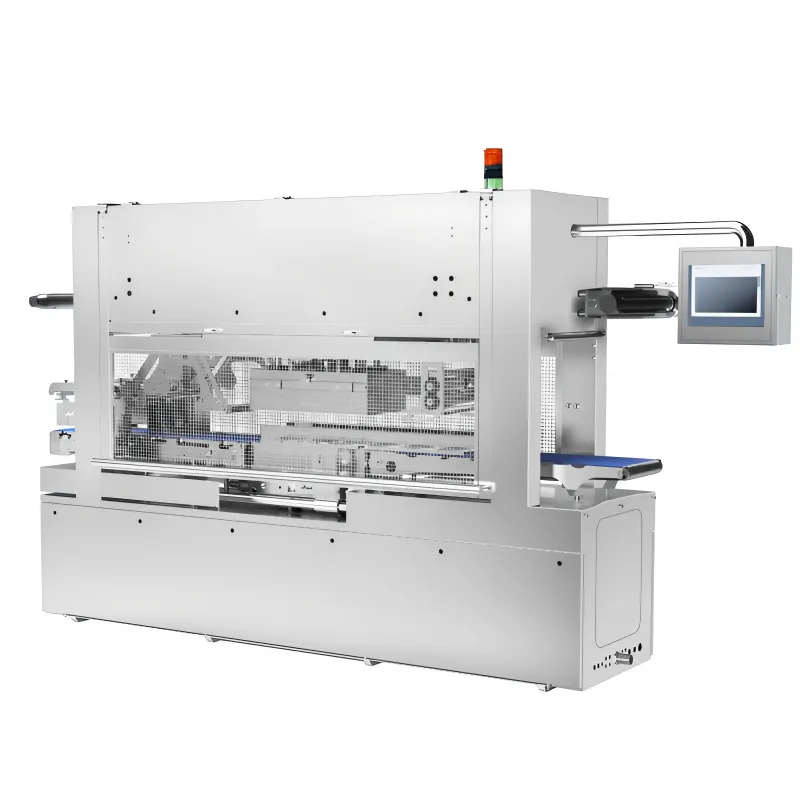
How micro-variations in feed timing and position propagate to seal misalignment and fill volume drift
Small mistakes in timing or positioning when running Vertical Form-Fill-Seal (VFFS) machines can really add up as products move down the line. For example, if there's just a half millimeter off in how far the film advances during forming, this often leads to seals that are misaligned by 3 to 5 mm at the end of the process. And when feed rates aren't consistent during dosing operations, we typically see fill weight variations going over 2%. Where do these tiny errors come from? Mostly three places: delays in how fast servo motors respond, problems with film slipping in those transport grippers, and delays in detecting registration marks. The latest equipment fights back against these issues using optical tracking systems that adjust in under 10 milliseconds. This approach cuts down on positional drift problems by about 80% when compared to older mechanical systems, though operators still need to watch for other factors that might creep in.
The three critical accuracy dependencies: registration, bag length consistency, and longitudinal tension stability
VFFS precision hinges on interdependent variables where failure in one dimension cascades across the packaging process:
- Registration accuracy ensures print patterns align within ±0.3mm tolerance at sealing jaws
- Bag length consistency requires film advance repeatability of 99.7% to prevent volumetric fill errors
- Longitudinal tension stability must maintain 15–25N force bands to avoid puckering or stretching
Tension fluctuations exceeding 10% induce film elasticity variations that alter bag dimensions by up to 1.5%, directly impacting fill accuracy. Advanced controllers now synchronize these parameters through closed-loop feedback systems, achieving <0.8% fill deviation at 120 bags-per-minute speeds.
Intermittent vs. Continuous Film Feeding: Trade-offs in Tension Control and Registration for VFFS Machines
Cyclic tension spikes in intermittent systems and their impact on seal integrity and positional walkover
When intermittent VFFS machines stop the film during sealing operations, they generate sudden tension surges that travel right through the packaging material. These regular ups and downs in tension can go over 30% higher than normal levels, which stretches the film and causes tiny slippages against those pull belts. What happens next is pretty problematic too. The shifting position messes up those printed registration marks by about plus or minus 1.5mm on average, so we end up with crooked seals in roughly 7% of all packages based on what we see from our audits on production lines. And this kind of instability really adds up fast. Our rejection systems have to throw away around 120 bags every single hour when running at full speed. Another big issue comes from those tension peaks when the machine stops suddenly. They actually break down the heat seal layers, making pinhole defects appear in about 18% more cases for things like powdered supplements where moisture protection matters most.
Why hybrid servo-cam feeding dominates modern high-speed VFFS machines (¥120 bpm)
When it comes to packaging operations, hybrid servo-cam film feeding solves what many call the speed versus accuracy dilemma by combining continuous movement with spot-on registration points. Traditional intermittent systems just can't match this because their cam driven transport keeps tension remarkably stable around 5% fluctuation range, while those electronic servo motors handle the bag length synchronization automatically. What makes this system really stand out is how it gets rid of that annoying film bounce whenever the machine changes direction something that becomes super important at speeds over 120 bags per minute. The fact that the film keeps moving forward all the time means filling and sealing happen together, which cuts down on overall cycle time by about a quarter compared to machines that keep stopping and starting. Snack manufacturers who deal with tricky products such as potato chips will appreciate this setup since it holds fill weights accurate to within roughly 0.8%, plus they get throughput rates that would be completely unattainable using older style intermittent systems still in operation today.
Advanced Film Transport Designs That Enhance VFFS Machine Filling Accuracy
Dual-gripper transport with segmented tension zones: reducing slippage during dosing and improving fill consistency
Dual-gripper transport designs address film slippage during product dosing—a key contributor to fill variations exceeding 5% in volumetric applications. By isolating tension zones, they decouple critical functions:
- The primary gripper secures film during sealing while the secondary grips new material
- Segmented tension control minimizes disruptive force spikes during indexing
This separation reduces film micro-slippage by 15–20%, significantly improving filling consistency—especially for powdery or granular products prone to backflow under unstable film conditions. Enhanced registration accuracy also lowers seal misalignment defects. Manufacturers achieve ±0.5% fill rate consistency even at 160 bags per minute (BPM) through this synchronized transport approach.
Selecting the Right Film Feeding System for Your VFFS Machine Application
When selecting the right film feeding system for a vertical form fill seal (VFFS) machine, there are really three main things to look at: how well the film works with the product, what kind of production volume is needed, and the actual space available plus who will be operating it day to day. Start by figuring out which type of film transport makes sense for the product itself. Intermittent, continuous, or hybrid systems each have their place depending on what's being packaged. For rough stuff like gravel or sand, the film needs extra tension control so it doesn't tear when running fast through the filler. Next up is matching speed capabilities to production goals. Most facilities aiming for over 120 bags per minute find they need servo driven feeding systems just to keep everything lined up properly during those long runs. And finally don't forget about physical space constraints and operator experience levels either. Automated tension compensation systems cut down on manual adjustments by around half compared to older mechanical setups, which means less training time wasted and fewer mistakes during setup changes between different products. Look for options that strike a good balance between getting accurate results and keeping operations straightforward enough that even newer staff can handle them without constant supervision throughout all production shifts.
FAQ
What are the major factors impacting VFFS machine accuracy?
The primary factors affecting Vertical Form-Fill-Seal machine accuracy include the precision of film feeding, registration accuracy, bag length consistency, and maintaining longitudinal tension stability.
How does intermittent and continuous film feeding affect VFFS machines?
Intermittent film feeding creates tension spikes, leading to seal misalignment and potentially more rejected bags. Continuous film feeding, particularly in hybrid systems, provides stable tension and higher speed capabilities, ensuring accurate sealing and filling.
What is the advantage of dual-gripper transport designs in VFFS machines?
Dual-gripper transport designs reduce film slippage, enhancing fill consistency and registration accuracy. This setup minimizes fill variations and seal misalignment defects, even at high speeds.
Table of Contents
- Why Film Feeding Precision Is the Primary Driver of VFFS Machine Accuracy
- Intermittent vs. Continuous Film Feeding: Trade-offs in Tension Control and Registration for VFFS Machines
- Advanced Film Transport Designs That Enhance VFFS Machine Filling Accuracy
- Selecting the Right Film Feeding System for Your VFFS Machine Application
- FAQ