
 EN
EN
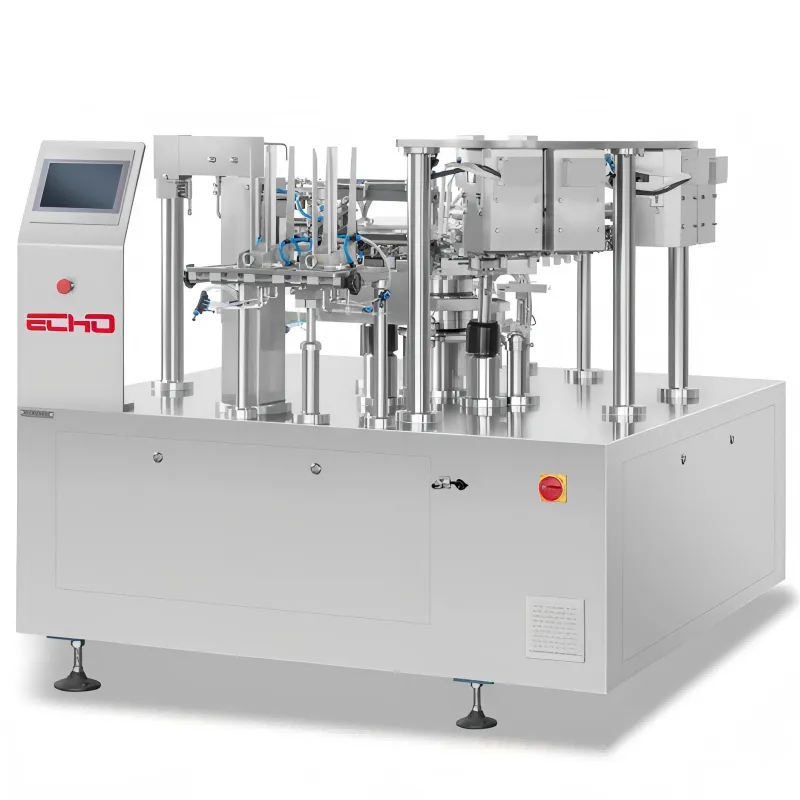
Features That Separate a Versatile Flow Pack Wrapper from a Single-Product Machine
A flow pack wrapper — the horizontal wrapping machine that seals products in a continuous film tube with fin-seal and cross-seal mechanisms — appears mechanically simple. Film unwinds, product enters, wrapping happens, packages exit. The difference between a machine that runs one product reliably for years and one that adapts to five different product formats without consuming maintenance hours lies in design details that are invisible during a showroom demonstration but dominate everyday production reality.
Start with the film-path design. A flow pack wrapper routes film from the unwind roll through tension rollers, over the forming shoulder — the curved metal guide that folds flat film into a tube around the product — and into the sealing jaws. Every roller bearing, every film-contact surface, and every bend radius in this path affects how well the machine handles thin films (which stretch under tension that thicker films ignore), printed films (which require registration accuracy within ±0.5 mm to avoid misalignment), and films with different surface friction coefficients (which track differently through the same roller arrangement). ECHO Machinery's DXD series flow pack wrappers use servo-driven film feeding with electronically synchronized horizontal sealing — eliminating the mechanical cams and linkages that introduce variability in film pull length as machine speed changes.
Sealing-Jaw Configuration: Heat, Pressure, and Time
Why Jaw Design Determines Package Integrity
The cross-sealing jaws on a flow pack wrapper must apply heat, pressure, and dwell time simultaneously to two layers of film traveling past at speeds that can exceed 60 bags per minute. The jaw surface profile — flat, serrated, or patterned — transfers heat into the film, melts the inner sealant layer, and applies enough pressure to fuse the two melted layers into a single continuous seal. Too little heat: the seal peels open with finger pressure. Too much heat: the outer film layer distorts, creating a seal that looks ugly and fails under load. ECHO's DXD-1200/1600 horizontal machines maintain consistent sealing quality through servo-controlled jaw temperature regulation that keeps seal-bar temperature within ±1°C of setpoint, preventing the thermal drift that causes gradual seal-quality degradation over a production shift.
The second sealing consideration is jaw-changeover speed. A machine that packages protein bars today and hardware parts tomorrow needs different jaw widths, different sealing temperatures, and possibly different jaw surface profiles. Quick-change jaw designs — those using cantilevered mounts or rapid-clamp mechanisms rather than bolts into threaded holes — reduce changeover from 30 minutes to under 10 minutes. ECHO Machinery's machines feature user-friendly HMI interfaces with recipe storage that recalls temperature, speed, and bag-length settings for each product, minimizing operator setup time during product changeovers.
Real-World Application: A Co-Manufacturer's Multi-Product Challenge
A contract packaging operation in the UK runs 14 different products — chocolate bars, bakery slices, pet treats, hardware blister packs — on the same flow-wrap line. Initially, each product changeover consumed 45 minutes: 20 minutes to change the forming shoulder and sealing jaws, 15 minutes to dial in new temperature and speed settings through trial and error, and 10 minutes of verification runs that produced scrap bags. At four changeovers per day, the line was losing three hours of production time — roughly 25% of a 12-hour shift.
The operation upgraded to ECHO Machinery's servo-driven flow pack wrapper with recipe-based HMI control. The solution separated changeover into two categories: quick changeovers (film size or product shape, 10 minutes by swapping quick-clamp forming shoulders and recalling a stored recipe) and full wash-down changeovers (30 minutes for allergen cleaning between food-grade and non-food products). The result: daily production time increased by 2.5 hours without adding a second shift or a second machine — a throughput gain equivalent to adding one full production day per week. The operation now quotes shorter lead times for small-batch runs, attracting business that competitors with longer changeover cycles cannot profitably accept.
Frequently Asked Questions
What is a flow pack wrapper used for?
Flow pack wrappers package bar-shaped foods (candy bars, granola bars, protein bars), baked goods (pastries, cookies individually wrapped), medical devices (syringes, catheters in pouches), hardware (screws, bolts in multi-packs), and any solid product that benefits from a pillow-style package with fin-seal and cross-seal closures. ECHO Machinery supplies these machines for confectionery, snack, and pharmaceutical applications.
What film thickness range does a flow pack wrapper handle?
Most flow pack machines handle films from 20 to 80 microns thick. The forming shoulder and tension-control system determine minimum thickness (thinner films stretch and wrinkle more easily). The sealing-jaw temperature and jaw gap determine maximum thickness (thicker films require more heat energy to achieve a reliable seal).
What maintenance is critical for a flow pack wrapper?
Clean the sealing jaws daily to prevent carbonized film residue from accumulating — residue acts as an insulator, reducing heat transfer and causing seal failures. Inspect the forming shoulder for scratches weekly — scratches create friction that pulls film off-registration. Replace Teflon tape on sealing jaws monthly — worn tape causes uneven heat transfer. ECHO Machinery provides maintenance schedules and spare-parts availability.
How fast can a flow pack wrapper run?
Single-lane machines: 60–200 packs per minute. High-speed machines like ECHO's DXD-1200/1600: up to 1,200–1,600 packs per minute for small-format packages. Actual speed depends on product length (longer products need slower film feed to allow adequate seal dwell time), film type (thicker films or cold-seal films may require slower sealing), and product feed consistency.
What is cold-seal packaging and how does it differ from heat-seal?
Cold-seal packaging uses a pressure-sensitive adhesive pre-applied to the film — pressure from the sealing jaws activates the bond without heat. This is critical for heat-sensitive products like chocolate bars, where hot-seal temperatures above 45°C would melt the product surface. Cold-seal runs slower (40–80 packs per minute) because the adhesive requires longer dwell time under pressure to form a bond comparable to heat-sealed film.
How do you match a flow pack wrapper to the product?
Match the film width to product circumference, the forming-shoulder design to product shape (flat products need different shoulder geometry than round products), the jaw width to the package length, and the infeed system to product handling (lug-chain infeeds for consistent spacing, belt infeeds for random spacing). ECHO Machinery's application engineers assist with this matching process.