
 EN
EN
The Fundamental Trade-Off: How VFFS Machine Speed Impacts Seal Integrity
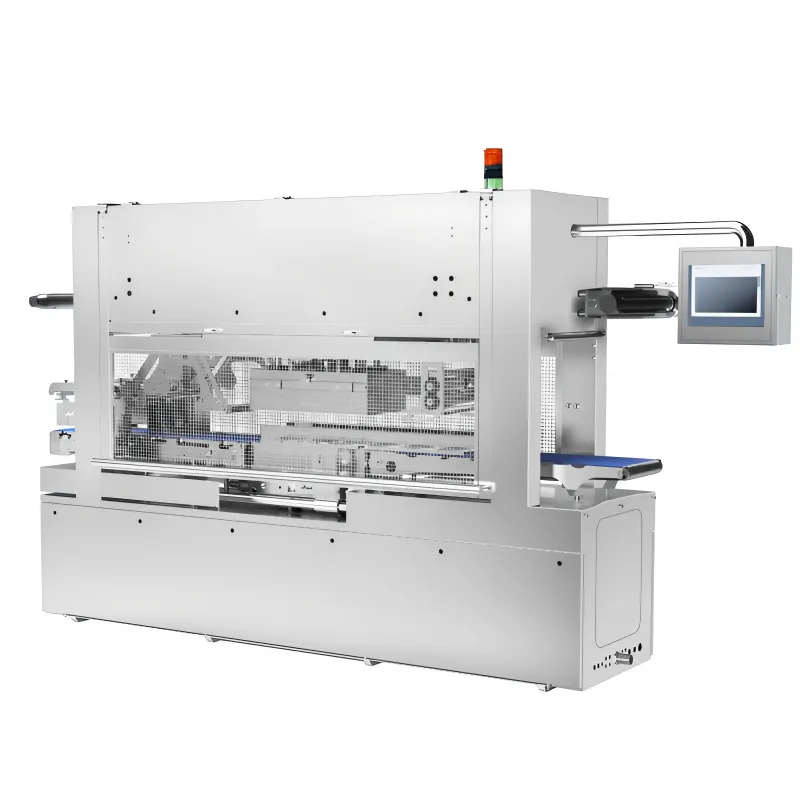
Why reduced dwell time at higher speeds weakens polymer melt fusion and bond strength
When there isn't enough heat applied, polymers simply won't melt completely or properly intermingle at the molecular level. Studies indicate that if the dwell time falls short of what's needed for specific materials, bond strength can drop by around 40%. The problem gets worse because incomplete melting creates tiny air pockets within the seals. These microscopic gaps compromise the whole structure, particularly problematic for those multi-layer film applications where different layers need to melt in sequence. What happens next? Leaks start forming, layers separate when products are stacked or moved around during shipping, and seals just give out earlier than expected in situations where temperature control matters most.
Precision Thermal & Motion Control: Optimizing Dwell Time and Jaw Synchronization for VFFS Machines
Why fixed-temperature sealing fails across speed ranges—and how servo-driven VFFS machines enable adaptive dwell time compensation
When VFFS machines run faster, fixed temperature sealing starts to fail because there's simply less time for heat to properly transfer into those plastic films. The problem gets worse at high speeds since regular systems just aren't quick enough to keep making good seals consistently. According to recent research from Packaging Dynamics Journal (2023), seal strength drops somewhere between 20% and 30% past what's considered acceptable when these machines push their limits. Traditional equipment has these set heating patterns that don't adjust well to changing conditions. As a result, we end up with weaker bonds in packaging materials which creates real problems with product leakage down the line.
VFFS machines equipped with servo drives tackle this issue using real time control systems. These machines have precision motors that can tweak how long the jaws stay closed regardless of what speed the conveyor is running at. This means they maintain good contact time even when things are speeding up or slowing down. The result? Heat gets distributed evenly throughout the product no matter what's happening on the line. Production speeds can actually go up around 40% while still keeping those seals intact. What makes it work so well is the feedback loop built into these systems. They constantly check and adjust both pressure levels and temperatures, which breaks the old problem where faster production always meant worse packaging results. Manufacturers finally don't have to choose between speed and quality anymore thanks to this technology.
Film Handling Stability: Tension, Tracking, and Motion Mode Effects on Seal Consistency
Intermittent vs. continuous motion: Impact on jaw alignment repeatability and seal position accuracy in high-speed VFFS operations
When running at speeds above 200 bags per minute, the type of motion used has a big impact on how consistent the seals are in Vertical Form Fill Seal (VFFS) machines. The problem with intermittent motion systems is they create alignment issues because every time the machine stops and starts again, the film shifts slightly due to inertia. These tiny movements can throw off the positioning of the sealing jaws by as much as 0.8 mm, which isn't great for creating proper hermetic seals. Continuous motion VFFS equipment solves this issue by keeping everything moving together smoothly. The film advances at the same rate as the sealing jaws, so position stays accurate within about 0.2 mm even when cranking out 300 bags a minute. This kind of four times better repeatability means fewer bad seals on the production line, something manufacturers really care about since faulty seals lead to product waste and customer complaints.
Things like film memory effects and those pesky tension differences along the web path really mess with consistency. That's why modern dancer roll systems equipped with servo motors help keep everything running smooth, holding tension within about 10% of what we need. This prevents that annoying film snap back when speeds change too quickly. And let's not forget edge guiding tech either. These systems tackle lateral drift issues head on, especially important for those tricky metallized laminates that just love to wander off track. At the end of the day, getting good seals in fast moving VFFS machines comes down to making sure all the moving parts work together properly, keeping tension stable throughout and handling materials with care from start to finish.
Product-Specific Constraints: How Fill Characteristics Limit VFFS Machine Speed Without Sacrificing Seals
Dairy powder adhesion and gummy confectionery weight transfer as hidden drivers of seal contamination and premature failure
The way different products fill into packaging creates real problems with how fast VFFS machines can run. Take dairy powders for instance they tend to leave behind tiny particles that stick to the sealing areas when running at top speeds. This messes up the polymer bonding process and weakens the seals as things get faster. The same issue happens with thick candy products too. These sticky substances transfer residue onto the machine jaws during filling, which affects heat transfer and leaves tiny gaps in the seal lines. When companies push past their ideal speed limits, equipment failures go up somewhere around 20 to maybe even 30 percent. Many manufacturers don't realize how much these interactions between products and films actually limit performance. To fix this, there are specific approaches needed like applying anti-static coatings for dairy work or special formulations for sticky candies. Getting these adjustments right keeps production moving without sacrificing those crucial air tight seals everyone wants.
Field data confirms particulate adhesion accounts for 42% of unplanned downtime in dairy packaging lines [Packaging Digest, 2023].
Proactive Quality Assurance: Calibration, Sense-and-Seal® Integration, and Speed-Validated Validation Protocols
Speed-ramped calibration workflows that synchronize thermal profile verification with VFFS machine performance tiers
Getting those calibration processes in sync matters a lot when trying to boost output from VFFS machines. The old school fixed validation methods just don't cut it anymore because they miss what happens with thermal drift when things start moving fast. What works better? A tiered approach that checks seal bar temperatures throughout different operation levels, maybe somewhere between half power and full blast. To do this right, companies need to actually put thermal sensors inside those sealing jaws so they can track real time conditions as production picks up pace. As speeds go higher, so does how often we need to check these things out. Take 80 cycles per minute for instance, most plants will run their validation tests twice during each shift. Catching those heat transfer problems early stops bad stuff from happening down the line like poor polymer fusion leading to leaks. Factories that have made the switch to these tiered protocols are seeing something around a 40% improvement in their ISO 11607-3 compliance numbers according to industry reports.
How Sense-and-Seal® technology enables +15% VFFS machine speed uplift while eliminating product-in-seal defects
Sensory feedback systems override traditional speed limitations. Sense-and-Seal® technology uses laser micrometers to detect particulate infiltration within 0.3 mm of seal paths. When contamination risks integrity, it dynamically adjusts sealing parameters:
- Pressure modulation: Isolates compromised sections while maintaining cycle time
- Temperature compensation: Applies localized heat spikes to counteract film irregularities
- Dwell extension: Targets only affected zones (<2 ms added per seal)
This prevents residue-induced weaknesses without blanket speed reductions. Facilities implementing real-time verification achieve 15% higher throughput while reducing seal-related waste by 90%. Adaptive control eliminates manual inspections traditionally required above 120 bags/min.
Frequently Asked Questions
What is the impact of machine speed on VFFS seal integrity?
Higher speeds reduce dwell time, which can weaken polymer melting and bond strength, leading to increased seal failures.
Why do different products affect VFFS machine speeds?
Products like dairy powders and gummy confections can leave residues that interfere with heat transfer, causing weakened seals.
How do servo-driven machines improve VFFS seal quality at high speeds?
They adjust dwell time and maintain consistent pressure and heat distribution, ensuring better seal integrity even at faster speeds.
Can VFFS machines run faster without increasing seal failures?
Yes, with advanced technologies like Sense-and-Seal®, machines can increase speed while maintaining seal quality by adapting sealing parameters in real-time.
Table of Contents
- The Fundamental Trade-Off: How VFFS Machine Speed Impacts Seal Integrity
- Precision Thermal & Motion Control: Optimizing Dwell Time and Jaw Synchronization for VFFS Machines
- Film Handling Stability: Tension, Tracking, and Motion Mode Effects on Seal Consistency
- Product-Specific Constraints: How Fill Characteristics Limit VFFS Machine Speed Without Sacrificing Seals
- Proactive Quality Assurance: Calibration, Sense-and-Seal® Integration, and Speed-Validated Validation Protocols
- Frequently Asked Questions