
 EN
EN
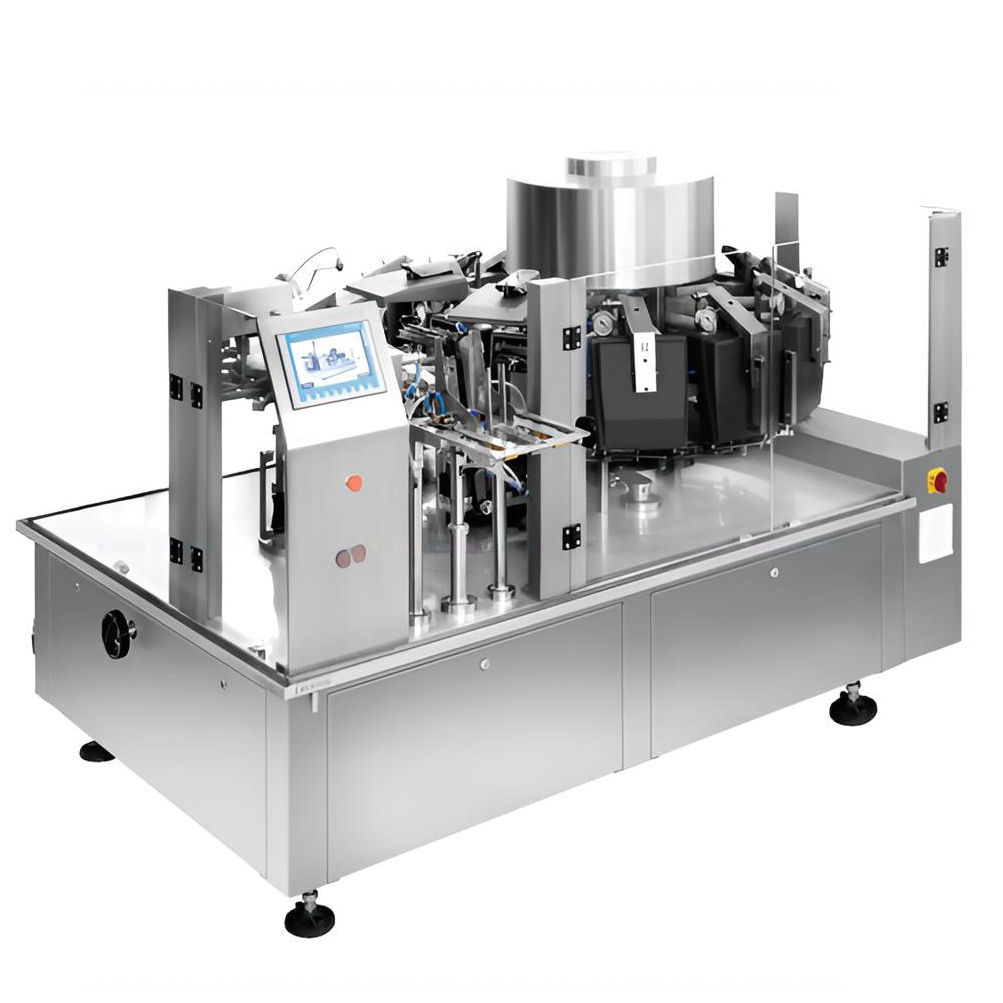
How a Vertical Form Fill Seal Machine Works: Core Mechanics and Process Stages
The Three-Stage VFFS Cycle: Forming, Filling, and Sealing
Inside every vertical form fill seal (VFFS) machine there's basically a three part process working together to get those packages made fast and reliably. The first thing happening is that flat roll film gets pulled through tension controlled rollers then wrapped around what they call a forming collar, creating this nice vertical tube shape without seams. When it comes to filling, these machines have all sorts of specialized equipment depending on what needs packed inside. For powders we see auger systems commonly used while snack manufacturers often go with multihead weighers. Some setups can actually produce over 300 bags per minute when everything runs smoothly. Then comes the sealing stage where horizontal jaws do double duty sealing the top of each pouch while cutting it loose from the bottom of the continuous tube. These seals happen pretty quick too, usually taking less than half a second to complete. According to Packaging Digest from last year, companies switching to this integrated system typically see their production rates jump anywhere between 30 to 50 percent compared to old fashioned manual approaches. Plus there's an added bonus of saving about 18% on film waste when replacing older systems.
Film Handling Essentials: Unwinding, Tracking, and Tension Control
Consistent film handling is foundational to uninterrupted VFFS operation. Critical subsystems include:
- Unwinding brakes, which apply calibrated torque to prevent stretching or slippage
- Edge-guide sensors, which detect and correct lateral drift in real time during high-speed runs
- Dancer rollers, which dynamically adjust tension as the supply roll diameter decreases
Without these controls, wrinkles, misfeeds, or tears can trigger unplanned stoppages contributing to up to 15% production downtime in high-volume facilities. Proper tension calibration (typically 2–5 N/mm²) ensures stable tube formation across diverse films, from ultra-thin laminates used in medical pouches to rigid polyester structures for industrial hardware.
Achieving High-Volume Output with Vertical Form Fill Seal Machines
Throughput Benchmarks: 30 to 300+ Bags/Minute Across Applications
Vertical form fill seal machines offer scalable output essential for modern packaging lines, with typical throughput ranging from 30 to 300+ bags per minute. Actual speed depends on product characteristics (e.g., free-flowing granules vs. irregular solids), bag size and design complexity, and machine configuration. Representative benchmarks include:
- Snack foods: 80–120 bags/minute
- Ground coffee and similar granulated products: 150+ bags/minute
- Pharmaceutical unit-dose blisters: 30–60 bags/minute, prioritizing accuracy over speed
Higher outputs are routinely achieved using multi-lane architectures where two or more parallel packaging lanes operate in sync or continuous-motion platforms that eliminate acceleration/deceleration losses inherent in intermittent-motion designs.
Key Performance Indicators: OEE, Uptime, and Rapid Changeover
Sustained operational excellence relies on three interdependent KPIs:
- OEE (Overall Equipment Effectiveness): Leading VFFS systems maintain 85% OEE by minimizing availability losses, performance slowdowns, and quality defects.
- Uptime: Servo-driven motion control and predictive maintenance protocols enable industry-leading uptime exceeding 95%.
- Changeover time: Tool-less format adjustments and digital recipe recall reduce changeovers to under 15 minutes even across vastly different bag sizes or film types.
Plants that systematically track and optimize these metrics report a 22% reduction in cost-per-bag and an annual output increase of over 34,000 bags per line (2023 Packaging Benchmark Study).
Integrating Fillers and Inspection Systems for Vertical Form Fill Seal Machine Efficiency
Precision Filler Pairing: Auger, Volumetric, and Multihead Weighers
What kind of filler gets chosen really makes all the difference when it comes to getting accurate measurements, keeping things moving at good speed, and making sure everything works well with what comes next in the sealing process. Auger fillers are great for stuff that sticks together like spices or those tricky pharmaceutical ingredients. They manage to keep weights within about 1% accuracy thanks to how they control the screw movement. Then there's volumetric cup fillers which work wonders for materials that flow easily, think roasted coffee beans for instance. These machines can handle around 120 bags per minute and don't need much adjusting before starting up. When companies need to package snacks fast or hardware products in bulk, multihead weighers become the go-to solution. These systems take readings from several load cells at once, allowing them to pack over 300 bags each minute while still hitting that sweet spot of ±0.5 grams precision. This cuts down on wasted product and messy spills during operation. Getting the timing right between when the filler releases its contents and when the jaws close matters a lot too. If these components aren't properly synced up, factories might end up losing around 15% of their materials plus see their overall equipment effectiveness drop considerably.
End-of-Line Integration: Checkweighers, X-Ray, and Case Packers
Integrating robust end line equipment turns standard VFFS machines into complete quality assurance systems that work continuously. The checkweighers constantly monitor bag weights as they come off the line, automatically throwing out anything that doesn't meet specs and sending adjustment information back to the filling controls. For detecting unwanted stuff inside products, x-ray machines spot all sorts of foreign objects like metal fragments, broken glass pieces, stones, and even heavy duty plastics across food packaging, pharmaceuticals, and other consumer items. These inspections happen fast too, handling around 400 bags every minute depending on setup. Once everything passes inspection, automated case packing systems gather the finished pouches and load them into shipping boxes, which cuts down on manual work by roughly 85-90% and keeps the way products are stacked on pallets much more consistent. When properly set up and connected together, this whole chain of technology improves product tracking throughout the supply chain, minimizes chances of product recalls, and helps manufacturers stay within required regulations such as FDA 21 CFR Part 11 guidelines and ISO 22000 food safety standards.
FAQ
-
What is a Vertical Form Fill Seal (VFFS) machine?
A VFFS machine is an automated piece of equipment used in packaging to form bags from flat roll film, fill them with a product, and then seal them.
-
What products can be packaged with VFFS machines?
VFFS machines can package a wide variety of products including powders, granules, snack foods, and even pharmaceutical items.
-
How fast can VFFS machines operate?
VFFS machines can operate at speeds ranging from 30 to over 300 bags per minute, depending on the product and machine configuration.
-
What are the main benefits of using VFFS machines?
The main benefits include increased packaging speed, improved accuracy, reduced film waste, and consistent product quality.
-
How do VFFS machines ensure product and packaging quality?
These machines integrate fillers and inspection systems like checkweighers and x-ray machines to ensure accurate filling and detect any foreign contaminants.