
 EN
EN
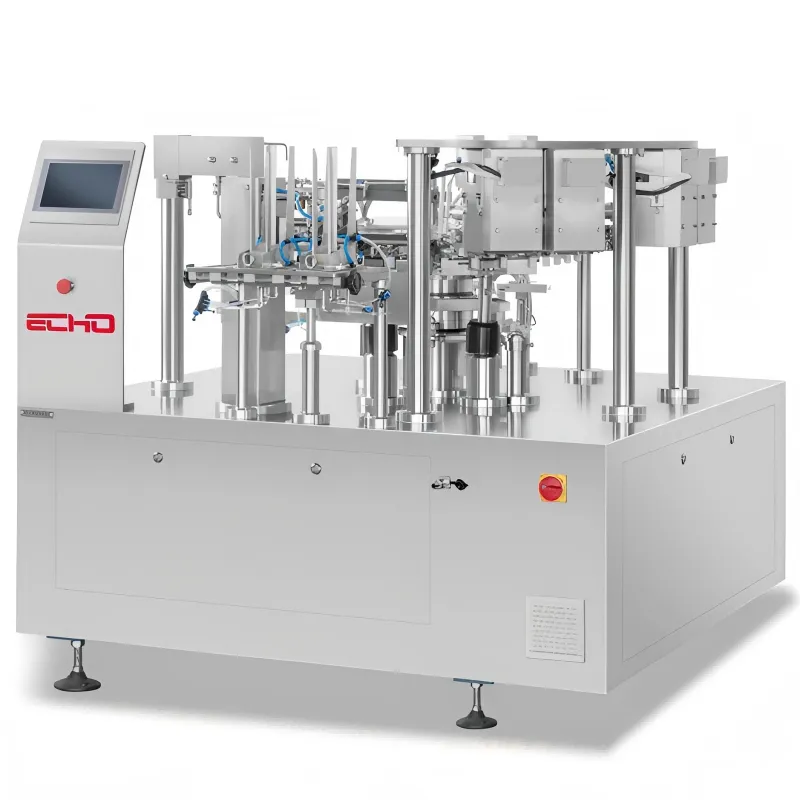
Why Automated Packaging Machines Boost Efficiency
Automated packaging machines transform production lines by delivering measurable efficiency gains across three critical dimensions. First, they drastically reduce labor costs—automating repetitive tasks like filling, sealing, and labeling cuts manual labor requirements by up to 50%, freeing staff for higher-value roles. Second, they accelerate throughput: advanced machines operate at speeds exceeding 60 units per minute, achieving double the output of manual methods—enabling scalable capacity without physical line expansions. Third, precision engineering minimizes waste through consistent material application, reducing packaging errors by 30% and lowering material expenditure. Integrated self-diagnostics further cut downtime incidents by 40%. Together, these advantages maximize resource utilization while slashing cost per unit.
Core Technologies in Modern Packaging Machines
Precision filling and dosing systems for consistent output
Modern packaging machines rely on servo-driven precision filling systems that achieve accuracy within ±0.5% of target volumes. These systems use advanced sensors and Programmable Logic Controllers (PLCs) to maintain consistency across thousands of cycles—eliminating product giveaway and reducing material costs by 12–18%. Pharmaceutical and food manufacturers benefit most, where dosage accuracy directly impacts regulatory compliance and consumer safety.
High-speed labeling, coding, and hermetic sealing capabilities
Integrated vision systems apply labels at 400+ units/minute while verifying placement accuracy within 0.3mm tolerance. Laser coding marks batch information directly onto packaging without consumables, reducing operational costs by $18k annually per line. Advanced thermal sealing technologies achieve hermetic integrity at speeds exceeding 120 packages/minute, with real-time sensor feedback automatically adjusting parameters to accommodate material variations.
Robotics integration and modular packaging machine configurations
Collaborative robots (cobots) have slashed changeover times—from four hours to under 15 minutes—by enabling rapid reconfiguration of modular packaging systems. This flexibility reduces manual interventions by 70% when switching SKUs. Delta robots paired with machine vision execute high-speed, high-precision pick-and-place operations beyond human capability, while standardized interfaces ensure seamless integration with existing line equipment.
Implementing Packaging Machines: A Phased, ROI-Focused Approach
Diagnosing Line Bottlenecks and Setting KPIs for Automation Success
Begin implementation by identifying constraints through workflow analysis—common bottlenecks include manual handling delays, inconsistent sealing quality, and slow changeovers. Quantify these using current performance data to define precise Key Performance Indicators (KPIs), such as units-per-hour targets, allowable downtime thresholds, and defect rate ceilings. Factories that establish KPIs before automation achieve 30% higher ROI by aligning machine capabilities with actual operational gaps. Prioritize quantifiable metrics—material waste reduction, changeover duration, and seal failure rates—as benchmarks for post-implementation validation. Involve cross-functional teams to ensure technical specifications address maintenance accessibility, ergonomics, and integration with upstream/downstream processes.
Piloting, Validating, and Scaling Automated Packaging Machine Deployment
Adopt a staggered rollout starting with single-line pilots to minimize disruption. During the 30–60 day validation phase, rigorously test outputs against predetermined KPIs across multiple product formats and run durations. Document variables like seal integrity at peak speed and container compatibility—this reveals necessary adjustments before enterprise-wide scaling. Successful pilots typically demonstrate ≥15% throughput gains and measurable defect reduction before approving multi-line deployment. Coordinate scaling with phased staff training to optimize adoption, ensuring technicians master troubleshooting protocols. Post-scaling, continuous monitoring sustains ROI through incremental optimizations—including predictive maintenance scheduling and modular component upgrades. Facilities using this approach reduce implementation risk by half while accelerating time-to-value.
Selecting the Right Packaging Machine for Your Operation
Choosing optimal packaging equipment requires analyzing five critical dimensions. First, match production volume to packaging speed—machines must sustain throughput without compromising quality during peak demand. Second, assess product characteristics like viscosity, fragility, or irregular geometry; specialized systems prevent damage during handling and sealing. Third, calculate total cost of ownership (TCO), not just purchase price—account for maintenance complexity, energy consumption, and staffing reductions from automation. Fourth, prioritize modular configurations that support future upgrades, extending equipment life and avoiding premature obsolescence. Finally, validate compatibility with existing facility layouts and upstream/downstream processes. Effective selection balances current operational needs with strategic growth pathways—maximizing ROI through sustained efficiency, reliability, and adaptability.
FAQ
1. What are the key benefits of automated packaging machines?
Automated packaging machines reduce labor costs, improve throughput, minimize material waste, and incorporate self-diagnostic systems to reduce downtime.
2. How do modern packaging machines ensure consistent output?
They utilize precision filling and dosing systems with sensors and Programmable Logic Controllers (PLCs) to maintain accuracy within ±0.5% across cycles.
3. How do robotics enhance packaging operations?
Robots cut changeover times, enable rapid reconfiguration, and improve precision in tasks like pick-and-place operations while reducing manual labor needs.
4. How should businesses approach implementing packaging machines?
Start with identifying line bottlenecks, setting KPIs, running pilot programs, and scaling gradually with staff training to sustain ROI and reduce risk.
5. What factors should be considered when choosing a packaging machine?
Evaluate production speed, product characteristics, total cost of ownership (TCO), modularity for upgrades, and compatibility with existing systems.