
 EN
EN
Cylindrical Distinction: Why Luxury Coffee Tube Packaging Commands Premium Shelf Position
Specialty coffee shelves overflow with flat-bottom pouches and stand-up gusset bags. When every competitor uses rectangular flexible packaging, the cylindrical coffee tube creates instant visual differentiation. The format does more than stand out — it communicates craftsmanship, justifies premium pricing, and often finds a second life in consumers' kitchens as storage for beans, tea, or dry goods.
Structural Advantages of Tube Packaging for Coffee
Why Cylindrical Geometry Protects Product Better Than Flat Formats
Coffee tube packaging offers inherent crush resistance that flexible pouches cannot match. A rigid cylindrical wall distributes external force around its circumference — a stack of six coffee tubes in a shipping case transfers weight through the tube walls rather than directly onto the product. Flexible pouches under identical stacking conditions compress the coffee, potentially cracking whole beans or compacting ground coffee into solid lumps.
The cylindrical format also creates a natural oxygen barrier advantage. Tube packaging typically uses multi-layer paperboard or rigid plastic construction with internal barrier liners. The continuous wall — free of the side-gusset folds and corner seals that create weak points in pouch construction — provides more uniform protection. For whole-bean coffee requiring degassing, tubes accommodate one-way valves in the base or lid without the seal-integrity risks that valve installation creates in flexible pouch side walls.
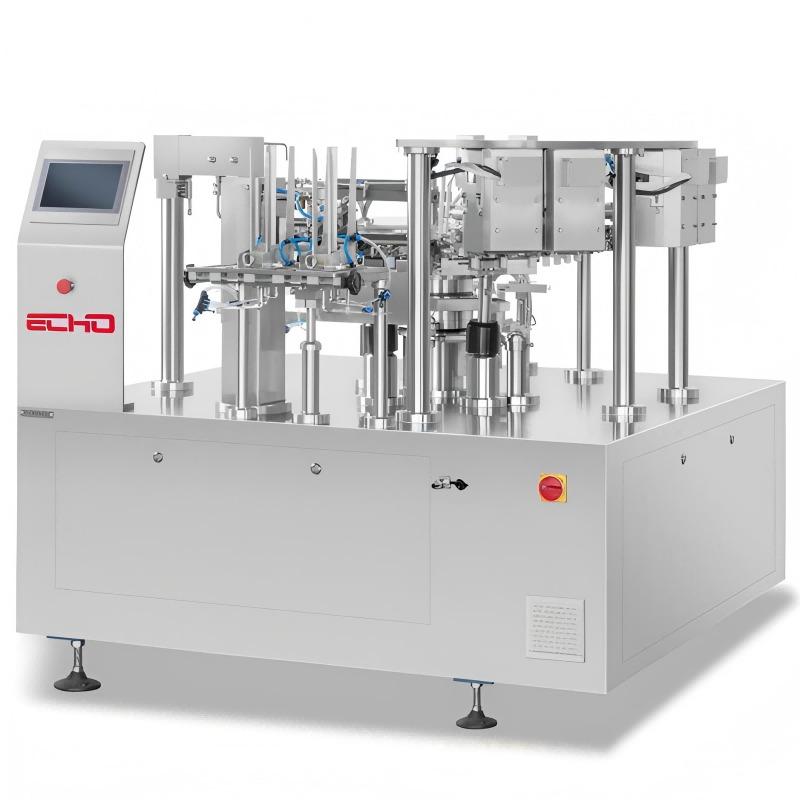
Manufacturers producing coffee tube packaging at scale benefit from automated filling and capping systems. ECHO Machinery's packaging platforms handle cylindrical rigid containers alongside pouch formats, enabling coffee brands to manage multiple packaging types through a single supplier relationship.
The Reusability Factor Consumers Reward
Luxury coffee tube packaging succeeds partly because consumers perceive value beyond the initial product. A well-designed tube becomes a pantry container, desk organizer, or gift vessel — extending brand visibility weeks or months beyond the last brew. Consumer surveys consistently show willingness-to-pay premiums of 15–35% for coffee sold in reusable packaging versus equivalent coffee in disposable formats.
This reusability directly supports premium positioning. A specialty roaster selling single-origin Ethiopian Yirgacheffe at 22 per 12oz in a kraft pouch competes on price against every other 22 bag on the shelf. The same coffee in a matte-finish reusable tube with cork stopper commands $28–34 — the packaging itself signals that the contents deserve the higher price.
Design Elements That Define Luxury Coffee Tube Packaging
Material Choices: Paperboard, Tin, Glass, and Bamboo
Paperboard tubes with internal barrier liners dominate the market due to favorable cost-to-premium-perception ratio. A composite paperboard tube with foil inner liner, metal end caps, and full-wrap printing costs roughly $0.85–1.40 per unit at 10,000-unit quantities — accessible for mid-tier specialty brands.
Tinplate and aluminum tubes offer the highest perceived luxury and best reusability but carry per-unit costs of $2.50–4.00 depending on diameter, height, and decoration complexity. These suit limited-edition releases, holiday gift sets, and ultra-premium single-estate offerings where packaging cost as a percentage of retail price stays below 12–15%.
Glass tubes with cork or bamboo stoppers appeal to the zero-waste consumer segment. While heavier and more expensive to ship than paperboard alternatives, glass communicates purity and preservation — attributes that resonate strongly with organic and biodynamic coffee buyers.
Real-World Brand Experience
A Nordic specialty roaster launching a direct-to-consumer subscription service tested three packaging formats across a 1,000-customer pilot: standard stand-up pouch, paperboard tube, and tin canister. The paperboard coffee tube packaging group showed 34% higher retention after three months versus the pouch group and 18% higher than the tin group. Customer feedback cited the tube's countertop appearance and reusability as primary satisfaction drivers. The roaster rolled out tubes as the default subscription format and achieved 27% higher average order value within six months, partly because the premium packaging attracted customers willing to purchase higher-priced single-origin selections.
Frequently Asked Questions
Does coffee tube packaging cost more than traditional pouches?
Yes — paperboard tubes cost approximately 2–3 times more than equivalent-volume stand-up pouches at comparable order quantities. However, the packaging cost increase is often offset by higher retail pricing and customer retention gains. ECHO Machinery helps brands calculate total packaging cost per unit sold rather than per unit produced.
How is coffee tube packaging sealed for freshness?
Most tubes use an internal barrier liner (aluminum foil or metallized film laminate) combined with airtight end caps. Induction sealing on the inner liner and friction-fit or threaded caps provide double-barrier protection. Some designs incorporate one-way degassing valves in the base cap for whole-bean coffee.
What diameter tubes are common for coffee packaging?
Standard coffee tube diameters range from 65mm to 100mm, with heights from 150mm to 250mm. A 75mm × 200mm tube holds approximately 250–300g of whole-bean coffee. Small-format 50mm × 120mm tubes suit single-serve or sample-size portions popular in subscription box models.
Can coffee tube packaging be customized with embossing or foil stamping?
Yes — paperboard tubes accept embossing, debossing, foil stamping, spot UV coating, and matte/gloss contrast finishing. These tactile decoration techniques add distinctive shelf presence but require minimum runs of 5,000–10,000 units to amortize tooling costs.
Is coffee tube packaging environmentally friendly?
Paperboard tubes with aluminum or compostable inner liners can achieve recyclability in paper streams where local infrastructure supports composite packaging separation. Metal tubes are fully recyclable. Brands should verify end-of-life pathways with local waste management authorities before making environmental claims.
What filling speed is achievable with tube packaging?
Automated tube filling and capping systems process 30–60 tubes per minute depending on fill weight and capping complexity. ECHO Machinery integrates tube handling with pouch and sachet lines for multi-format production flexibility, allowing brands to run different packaging types on coordinated equipment.