
 EN
EN
Less Foil, More Margin: The Financial Case for Simple Chocolate Packing
Premium chocolate packaging has historically meant layers: foil inner wrap, paper sleeve, rigid box, ribbon closure, and sometimes an outer carton for retail display. Each layer adds material cost, assembly labor, shipping weight, and — critically — disposal complexity that consumers increasingly reject. Simple chocolate packing strips away non-essential layers while maintaining product protection, creating measurable financial benefits that compound across procurement, logistics, and brand positioning.
Material Cost Reduction Without Sacrificing Protection
How Single-Layer Structures Replace Multi-Layer Systems
Traditional chocolate bar packaging uses three to four material layers: aluminum foil (product contact and dead-fold), waxed paper or parchment (secondary wrap), paperboard or cardstock sleeve (structure and printing surface), and sometimes an outer flow-wrap film (moisture barrier and tamper evidence). Simple chocolate packing consolidates to one or two layers — typically a single barrier paper wrap or a paper-plus-compostable-film combination.
The material cost savings are immediate. A four-layer chocolate bar wrap at 100,000-unit production volume typically costs 0.12–0.18 per unit. A single-layer barrier paper wrap produced at equivalent volume costs 0.06–0.09 per unit — a 40–50% reduction in packaging material expense. For a mid-size chocolatier producing 500,000 bars annually, the annual material savings exceed $30,000 before accounting for secondary benefits.
Barrier performance must be verified during the transition. Chocolate's enemies are moisture (causing sugar bloom), oxygen (causing fat oxidation and rancidity), and temperature fluctuation (causing fat bloom). A well-designed single-layer barrier paper combines a functional coating — typically a water-based dispersion coating or thin metallization — with the paper substrate to achieve moisture vapor transmission rates below 5 g/m²/day, adequate for 12-month ambient shelf life in temperate climates.
Production Speed Gains from Simplified Assembly
Every packaging layer removed eliminates a production step. Four-layer bar wrapping requires four separate feeding stations, four material roll changes per shift, and four potential jam points. Simple chocolate packing reduces to one or two feeding stations, cutting changeover time by 50–60% and increasing effective line throughput by 15–25% on equivalent equipment.
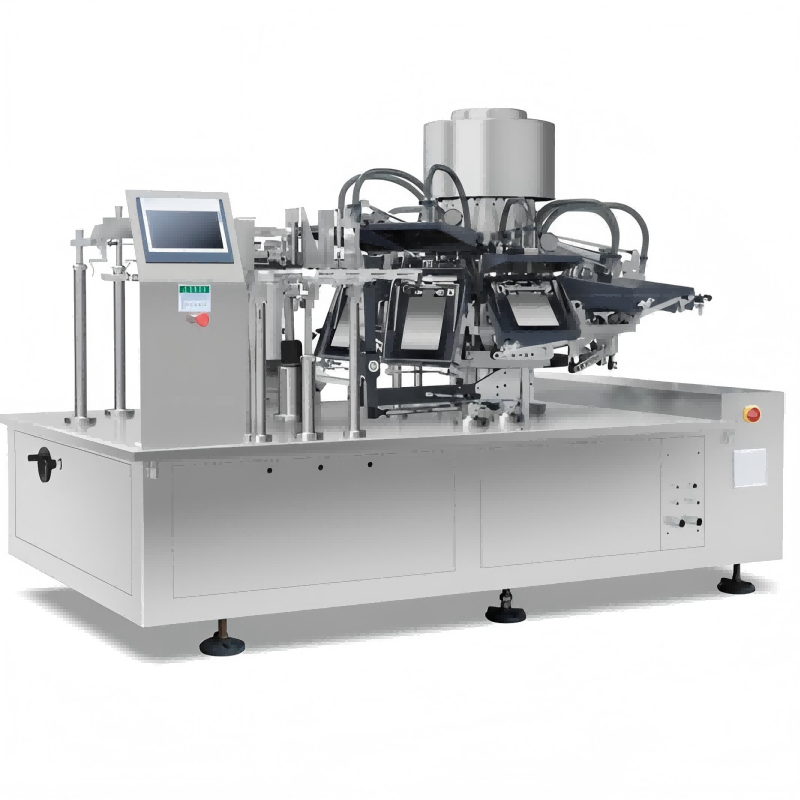
ECHO Machinery's flow-wrapping systems configured for single-layer paper packaging run at 120–180 packs per minute versus 80–120 packs per minute for multi-layer configurations on the same platform — the speed differential comes entirely from eliminating secondary wrapping stations.
Logistics and Retail Benefits
How Lighter Packaging Reduces Freight and Storage Costs
Packaging weight flows directly into freight cost calculations. A four-layer chocolate bar package typically weighs 8–12 grams; a single-layer simple chocolate packing solution weighs 3–5 grams. Across a pallet of 10,000 bars, the weight difference is 50–70 kg — roughly 8–12% of total pallet weight depending on bar size. Over a full container shipment, cumulative freight savings reach hundreds of dollars per load.
Retail shelf efficiency improves in parallel. Slimmer packages occupy less linear shelf space, allowing more facings per meter. Retail buyers allocating shelf space by SKU count rather than by brand favor formats that pack efficiently — a decision factor that sales teams can quantify in pitch materials.
Real-World Brand Transition
A British bean-to-bar chocolate maker producing 200,000 bars annually found packaging represented 23% of total product cost — unsustainable for a brand targeting £4.50 retail. They redesigned to simple chocolate packing: single barrier-coated kraft paper with direct flexographic printing, eliminating foil inner wrap, paper sleeve, and outer film. Material cost dropped 47%, throughput rose 22%, and pallet density improved 18%. Consumer feedback was overwhelmingly positive — customers perceived less waste as brand value. Instagram engagement on packaging-related posts rose 68% in the following quarter.
Avoiding Common Simplification Pitfalls
When Barrier Requirements Demand More Than One Layer
Simple chocolate packing cannot sacrifice protection for products in tropical or high-humidity climates. Bars sold in Southeast Asian convenience stores face ambient humidity above 80% RH — conditions where single-layer barrier paper fails within weeks. A two-layer system (barrier paper plus compostable inner wrap) provides necessary protection while still simplifying from four layers.
Fat bloom becomes visible faster in minimally packaged chocolate. Accelerated shelf-life testing at 25°C/60% RH and 30°C/75% RH should validate any simplified structure before rollout. ISO 22000 testing protocols ensure cost savings do not generate higher costs from product returns.
Frequently Asked Questions
Does simple chocolate packing protect against cocoa butter bloom?
Single-layer barrier paper with appropriate coating resists moisture ingress adequately for 9–12 months in temperate climates. In tropical conditions, a two-layer minimum is recommended. Fat bloom from temperature cycling occurs regardless of packaging layers — cold-chain integrity matters more than wrapper complexity for bloom prevention.
What printing quality can single-layer chocolate wrappers achieve?
Flexographic printing on barrier-coated paper achieves 4–6 color reproduction at 150 LPI (lines per inch) — sufficient for photographic-quality chocolate packaging graphics. Digital printing on paper substrates enables full-color variable-data printing for limited editions without plate costs.
How do consumers perceive simpler chocolate packaging?
Consumer research consistently shows that 60–70% of premium chocolate buyers view reduced packaging as a positive attribute when it is clearly intentional rather than appearing cheap. Communication on-pack — such as "minimal packaging by design" — helps consumers interpret simplification as brand philosophy rather than cost-cutting.
What is the minimum order quantity for custom simple chocolate wrappers?
Flexographic-printed wrappers carry minimums of 10,000–20,000 linear meters per SKU. Digital-printed wrappers start at 2,000–5,000 units, suitable for seasonal flavors, limited editions, and market testing before committing to larger print runs. ECHO Machinery supports both print formats on its flow-wrapping equipment.
Can simple chocolate packing be compostable?
Yes — barrier-coated paper using compostable coatings and compostable inner wraps (where needed) can achieve industrial composting certification under EN 13432. Home-compostable certification remains challenging at current technology levels. Brands should verify their target market's composting infrastructure before making on-pack claims.
How does packaging simplification affect production line setup?
Switching from multi-layer to single-layer wrapping typically requires one to two days of equipment reconfiguration — adjusting forming shoulders, sealing jaw temperatures, and film-tension parameters. ECHO Machinery provides remote and on-site technical support for packaging format transitions, with most changeovers completed within a single production shift.