
 EN
EN
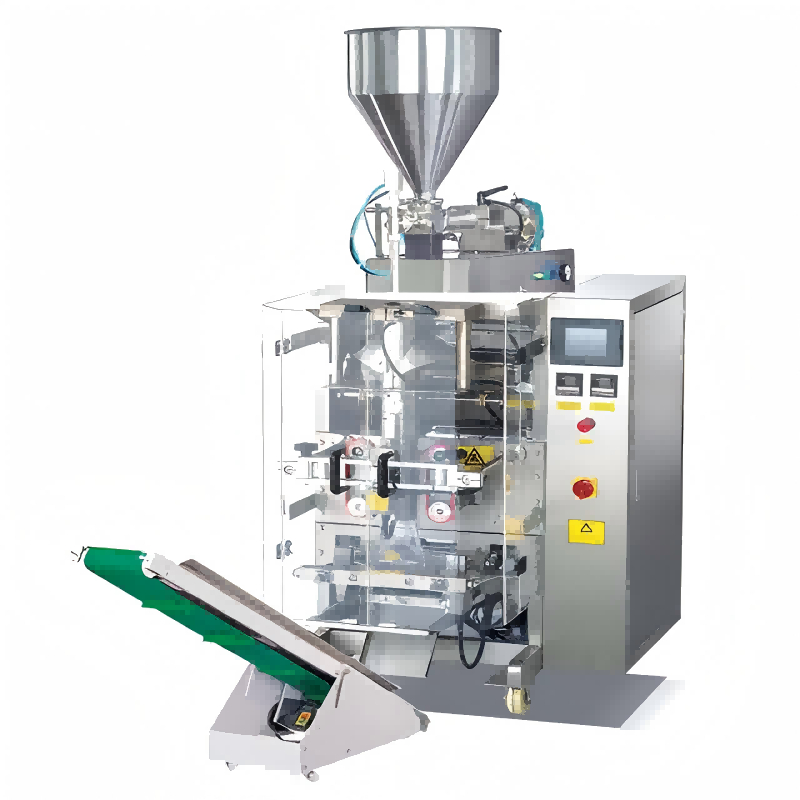
Precision Filling and Sealing Accuracy
Sub-millimeter dosing control via servo-driven systems
High-performance automatic fill seal packing machines achieve ±0.5% fill accuracy using servo-driven piston systems with closed-loop feedback control. These mechanisms regulate stroke length to sub-millimeter precision—dynamically adapting in real time to viscosity shifts, from thin solvents to thick creams. The result is consistent dosing without overfilling or product giveaway. Pharmaceutical manufacturers report up to 30% less material waste after upgrading to servo-controlled systems, with stable performance maintained across 10,000+ cycles and no measurable drift. Intuitive touchscreen interfaces simplify parameter adjustments, enabling operators to sustain target line speeds without compromising portion accuracy.
Real-time weight feedback with integrated load-cell calibration
Each package undergoes continuous weight verification via microprocessor-controlled load cells capable of detecting variations as small as ±0.1 grams—even at high throughput rates. Automatic calibration sequences run between batches to offset thermal expansion and mechanical wear, while advanced signal processing filters out vibrational noise. When deviations occur, the system triggers self-correction within 50ms, adjusting fill volume before nonconforming units accumulate. This closed-loop verification achieves 99.8% weight compliance in GMP-compliant environments and reduces package rejects by 40% compared to manual post-fill checks. All weight data is logged continuously, supporting full traceability for regulatory audits.
Intelligent Control System for Reliable Automation
PLC–HMI Synchronization Enabling <50ms Response Latency
Deterministic synchronization between the Programmable Logic Controller (PLC) and Human Machine Interface (HMI) forms the foundation of reliable automation. Using hardened communication protocols, these systems deliver closed-loop response times under 50ms—fast enough to correct fill-volume errors or resolve film-jam conditions mid-cycle. This real-time coordination eliminates manual interventions during high-speed operation by enabling:
- Instantaneous fault diagnosis, visualized on HMI dashboards that map live I/O signals
- Adaptive parameter adjustments, compensating automatically for viscosity fluctuations
- Predictive stop protocols, halting sealing jaws before defective pouches advance
Field data from packaging environments handling hygroscopic powders shows this latency threshold reduces unscheduled downtime by 22% (Packaging Digest, 2023). Such deterministic control ensures stable OEE across speed ranges—from 50 to 500 pouches per minute.
Versatile Material Handling for Diverse Packaging Formats
Quick-change tooling for pouches, sachets, and stick packs
Modular, standardized tooling enables format transitions between pouches, sachets, and stick packs in under 60 seconds—no specialized tools required. Designed for manufacturers producing everything from pharmaceutical powders to food pastes, this system maintains consistent seal integrity across formats while cutting changeover labor by up to 70% versus legacy equipment.
Auto-compensating film tension control for laminated and metallized substrates
Servo-driven film handling dynamically regulates tension across sensitive substrates—including 9-layer laminates and metallized films—preventing wrinkling, stretching, or deformation. Real-time load sensors detect force differentials as fine as 0.5N, triggering immediate unwind-brake adjustments. This preserves wrinkle-free presentation for premium graphics and accommodates thickness variations exceeding ±15%, a critical capability for oxygen-barrier metallized films used in coffee and snack packaging.
OEE-Driven Reliability and Uptime Optimization
High-performance automatic fill seal packing machines embed OEE analytics directly into their control architecture to maximize production stability. Real-time monitoring of vibration, thermal profiles, and cycle timing enables predictive insights into component wear—shifting maintenance from reactive fixes to scheduled, data-driven replacements. Integrated OEE dashboards also surface setup inefficiencies, helping operators standardize changeovers and reduce transition waste. By minimizing unplanned stops and optimizing planned maintenance windows, these systems sustain peak throughput across extended, high-demand production cycles.
FAQ Section
What is the fill accuracy of automatic fill seal packing machines?
These machines achieve a fill accuracy of ±0.5% using servo-driven piston systems that dynamically adapt to viscosity changes.
How do these systems ensure consistent weight compliance?
They utilize real-time weight feedback via load cells that can detect variations as small as ±0.1 grams, enabling closed-loop verification with 99.8% weight compliance.
What is the advantage of PLC–HMI synchronization in automation?
It allows real-time coordination with response times under 50ms, eliminating manual interventions and reducing downtime by enabling rapid error correction and adjustments.
How quickly can the tools be changed for different packaging formats?
The modular, standardized tooling allows format transitions in under 60 seconds, significantly reducing labor and maintaining seal integrity across formats.