
 EN
EN
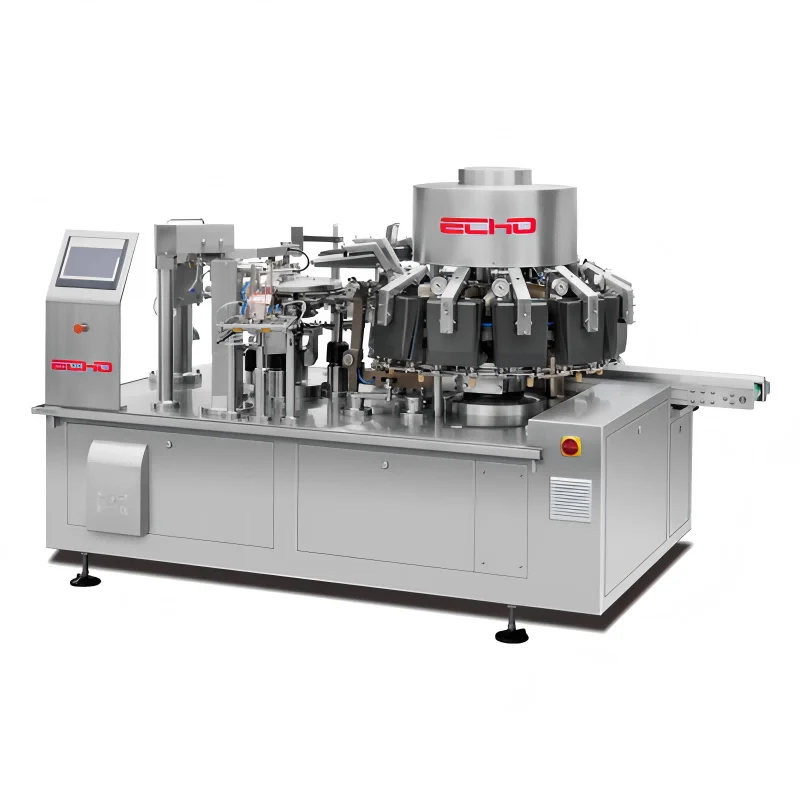
Nitrogen Flushing: The Core Crispness Preservation Technology in Popcorn Packaging Machines
How nitrogen displacement prevents moisture absorption and oxidative staling
Oxygen and moisture are the primary enemies of popcorn crispness. When they infiltrate a package, they trigger oxidation of oils and starches—leading to rancid off-flavors and a soft, chewy texture. A popcorn packaging machine neutralizes this threat by replacing ambient air inside the bag with pure nitrogen. As an inert gas, nitrogen displaces oxygen to residual levels below 0.5%, meeting the widely accepted industry benchmark for effective oxidative stabilization (2023 Industry Benchmark). This oxygen-free environment halts lipid rancidity and preserves the buttery taste profile. Simultaneously, the flush eliminates headspace humidity, preventing moisture absorption that would otherwise collapse the popcorn’s delicate, porous structure. The package is sealed immediately after flushing, locking in the nitrogen atmosphere and establishing a dry, stable microclimate. With neither water vapor nor reactive oxygen present, kernels retain lightness and crispness for months—not days.
Real-time gas monitoring and adaptive flushing cycles for consistent quality
Maintaining optimal nitrogen atmosphere across high-speed production demands precision control. Modern machines integrate inline O₂ sensors that continuously measure residual oxygen within each package. When readings exceed a preset threshold—commonly as low as 0.2%—the system initiates adaptive flushing cycles. The controller dynamically adjusts gas flow duration or pressure in real time, compensating for variations in bag volume, film permeability, and popcorn density. This closed-loop feedback ensures every package achieves its target oxygen concentration regardless of line speed. Some systems also monitor nitrogen purity, automatically switching to a backup supply if purity falls below 99.9%. Servo-driven sealing mechanisms then lock the atmosphere with leak rates under 0.05 cc/min—verified per ASTM F2338‑09 (2013)—ensuring the crispness protection remains uncompromised. The result is uniform shelf life and zero batch-to-batch variation, a critical advantage for global snack distribution.
Advanced Barrier Packaging Materials Integrated into Popcorn Packaging Machines
Multilayer film engineering: EVOH, metallized PET, and SiOx coatings for ultra-low permeability
Modern popcorn packaging machines integrate multilayer films engineered specifically to block oxygen and moisture—the two main drivers of staling. Ethylene vinyl alcohol (EVOH) layers reduce oxygen transmission rates (OTR) to under 0.5 cc/m²/day, representing a 99% improvement over monolayer polyethylene (2022 industry benchmarks). Sandwiched between polyolefin skins, EVOH’s moisture sensitivity is neutralized, preserving barrier performance even at 85% relative humidity. Metallized polyethylene terephthalate (PET) adds a reflective aluminum layer that cuts moisture vapor transmission rate (WVTR) to 0.1 g/m²/day. Transparent silicon oxide (SiOx) coatings deliver a 50% gain in moisture resistance over standard metallized films while maintaining recyclability (2023 Flexible Packaging Report). These films are fed directly into the machine, where co-extrusion and lamination ensure consistent layer thicknesses down to 5 µm—eliminating weak spots that could compromise crispness.
ASTM F1249 permeability testing and machine-embedded QC validation protocols
Inline quality control on popcorn packaging machines relies on ASTM F1249—the standard test method for measuring water vapor transmission rate (WVTR) through plastic film and sheeting. Using a modulated infrared sensor with a detection limit of 0.005 g/m²/day, the test delivers a pass/fail verdict in under 30 minutes (ASTM International, 2023). Many machines embed this capability directly: a sampling arm pulls film from the unwind station, seals it into a test cell, and automatically adjusts sealing parameters if WVTR drifts beyond specification. One leading manufacturer reports that such closed-loop validation reduces film waste by 12% and maintains seal leak rates below 0.05 cc/min. This real-time feedback ensures only barrier films meeting prescribed specifications proceed to packaging—locking in freshness from the moment the bag is sealed.
Precision Sealing and Modified Atmosphere Control in Popcorn Packaging Machines
MAP automation with inline O₂ sensors and closed-loop atmosphere adjustment
Modified atmosphere packaging (MAP) automation in modern popcorn packaging machines extends well beyond simple nitrogen flushing. Inline oxygen sensors monitor residual O₂ levels inside each package immediately after sealing and feed data to a closed-loop control system. That system adjusts nitrogen-flush duration and flow rate with millisecond precision. If O₂ rises above 0.5%, the controller instantly increases displacement to restore the target range of 0.2–0.5%. According to the Institute of Food Technologists (2021), exceeding 0.5% residual oxygen accelerates both moisture absorption and oxidative staling—causing crispness loss within days. The closed-loop logic compensates for variables like bag size, film permeability, and line speed, ensuring every package sustains a consistently low-oxygen atmosphere. This adaptive automation replaces manual calibration and intermittent checks, delivering reliable shelf-life extension and uniform crispness from production to consumer.
Servo-driven sealing systems: ±0.1 mm accuracy and leak rates under 0.05 cc/min
The sealing station of a popcorn packaging machine uses servo-driven jaws to achieve the hermetic closures essential for MAP integrity. These motors position sealing bars with repeatable accuracy of ±0.1 mm, applying uniform pressure and temperature across the entire seal area. Such precision prevents micro-channels caused by wrinkles or film-thickness inconsistencies—common failure points in less-controlled systems. Seal integrity is verified inline using ASTM F2338‑09 (2013), with pass/fail criteria set at leak rates below 0.05 cc/min. At this threshold, daily ingress of oxygen and moisture is negligible—effectively preserving the internal atmosphere for the product’s full shelf life. In contrast, pneumatic-actuated systems introduce variability and drift, increasing the risk of intermittent micro-leaks that cause gradual staling. By maintaining these tight tolerances, the servo-driven sealing system ensures the MAP environment remains intact—delivering the consistently crisp texture consumers expect.
Frequently Asked Questions (FAQ)
What is nitrogen flushing in popcorn packaging machines?
Nitrogen flushing replaces the air inside popcorn packaging with pure nitrogen to prevent oxidation and moisture exposure, ensuring the popcorn stays crisp.
How does nitrogen flushing preserve popcorn crispness?
Nitrogen eliminates oxygen and humidity, which are responsible for oxidation and moisture absorption—two major causes of staling in popcorn.
What are multilayer films used in popcorn packaging machines?
Multilayer films, such as EVOH, metallized PET, and SiOx coatings, are engineered to block oxygen and moisture, prolonging the shelf life of the popcorn.
How do inline sensors contribute to quality control in packaging?
Inline sensors monitor residual oxygen and water vapor levels, ensuring every package maintains optimal conditions for extended freshness and crispness.
Why are servo-driven sealing systems important?
Servo-driven sealing systems provide precise and consistent hermetic seals, preventing micro-leaks that could compromise the modified atmosphere inside the package.