
 EN
EN
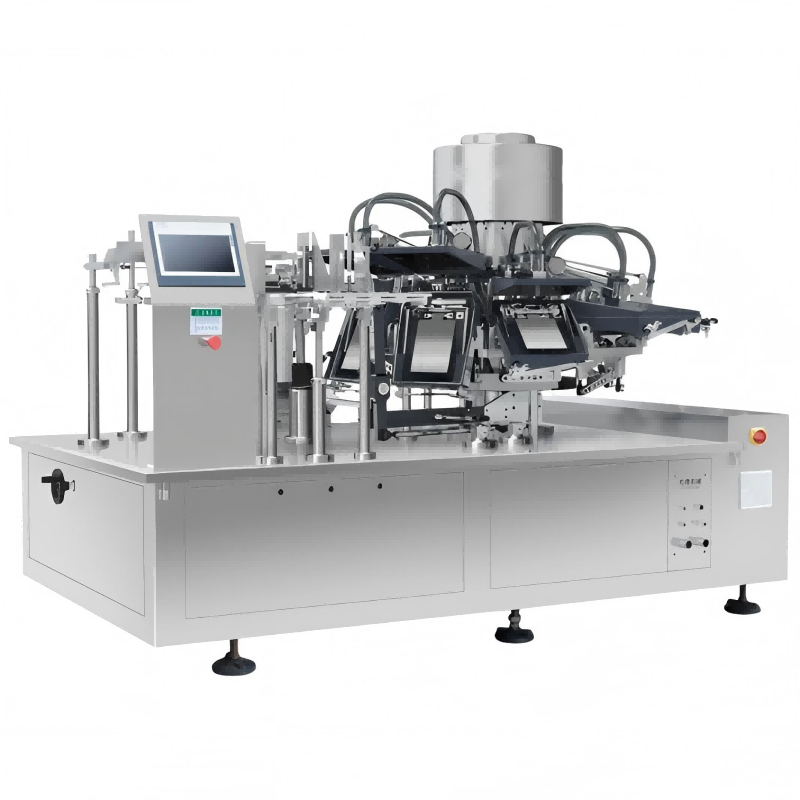
Total Cost of Ownership vs. Manual Packaging Efficiency
TCO Breakdown: Capital, Maintenance, Utilities, and Footprint for a box packing machine
A box packing machine requires a higher upfront capital investment than manual workstations—but the total cost of ownership (TCO) reveals compelling long-term savings. While initial costs are elevated, maintenance expenses decline over time thanks to robust engineering that minimizes breakdowns and extends component life. Energy use is also more efficient: modern semi-automatic machines consume less power per box than manual operations, which rely on sustained lighting, HVAC, and auxiliary equipment across larger floor areas. Space utilization improves significantly—a single compact machine cell replaces multiple manual stations, freeing up valuable production floor area. Critically, material waste drops from 8–10% in manual handling to just 2–3% with automation, directly lowering consumable costs. When these factors—maintenance, energy, space, and waste—are weighed across a standard 5-year lifecycle, the TCO of a semi-automatic box packing machine frequently falls below that of sustained manual packaging.
Throughput Gains: From 4–6 to 12–20 Boxes/Min with Semi-Automatic Box Packing Machine Integration
Manual packaging lines typically sustain only 4–6 boxes per minute due to human fatigue, inconsistent pacing, and required breaks. Integrating a semi-automatic box packing machine lifts throughput to a steady 12–20 boxes per minute—a threefold improvement. This gain stems from repeatable cycle times, near-zero operator idle time, and integrated quality checks that prevent downstream rework. The result is faster order fulfillment without adding headcount, enabling small manufacturers to scale capacity, take on larger orders, or reduce overtime and shift hours. Unlike fully automatic systems, semi-automatic models deliver this performance leap while preserving operational simplicity—making them ideal for teams with limited automation experience.
Strategic Fit: Labor Constraints, Scalability, and Operational Readiness
Addressing Chronic Labor Shortages in Secondary Packaging Roles
Chronic labor shortages in secondary packaging roles threaten line continuity and on-time delivery for small manufacturers. When manual packing stations go understaffed, bottlenecks cascade upstream—delaying assembly, increasing WIP, and extending lead times. Automating end-of-line box packing allows facilities to redeploy $18–$25/hour packaging staff into higher-value roles such as real-time quality verification, machine supervision, or process documentation. This strategic reallocation mitigates recruitment pressure in low-skill, high-turnover positions while sustaining output. Production managers across multiple food and consumer goods facilities report over 30% fewer turnover-related disruptions within six months of deploying semi-automatic packing solutions.
Scalability Pathways: How a box packing machine Supports Growth Without Linear Headcount Increases
A well-integrated box packing machine decouples output growth from linear labor expansion. For example, when annual volume increases from 500,000 to 750,000 units, facilities using semi-automated packing require just 12% more labor—compared to the 50% increase typical with manual scaling. One trained technician can effectively oversee up to three semi-automatic machines, eliminating the need for incremental hires per new production line. This operational elasticity proves essential during seasonal peaks, where temporary labor shortages often cap manual capacity at 15–20% above baseline. Automation removes that ceiling—enabling scalable throughput aligned with demand, not staffing availability.
Real-World Validation: Small-Facility Case Studies
Midwest Food Producer (8-Person Team): 14-Month Payback After Automating Box Packing
A Midwest food producer with an 8-person team faced persistent staffing gaps in secondary packaging—leading to delayed shipments and rising overtime costs. They implemented a semi-automatic box packing machine to handle sealing, labeling, and stacking, eliminating four full-time manual packing roles. Staff were reassigned to inline quality assurance and packaging line oversight, improving first-pass yield and reducing customer returns. Labor savings, reduced material waste, and tighter order cycle times delivered full ROI in 14 months—validating automation viability even for facilities operating below 500,000 annual units.
FAQ
What is Total Cost of Ownership (TCO) for a box packing machine?
TCO refers to the overall cost of purchasing, operating, and maintaining a machine over its lifecycle. For a box packing machine, TCO includes capital investment, energy use, maintenance, and potential savings from reduced waste and improved efficiency.
How does throughput improve with a semi-automatic box packing machine?
A semi-automatic machine can increase throughput from 4–6 boxes per minute in manual operations to 12–20 boxes per minute due to repeatable cycles and reduced operator idle time.
How can automation address labor shortages?
By automating end-of-line tasks, facilities can redeploy staff into higher-value roles, reducing dependency on low-skill, high-turnover positions.
What are the scalability benefits of a box packing machine?
Automation allows facilities to scale production without hiring additional staff, enabling flexible growth even during seasonal peaks.
What is the ROI timeframe for automating a small-scale operation?
For smaller facilities, the ROI can occur within 14 months due to savings in labor costs, reduced waste, and faster order fulfillment.
Table of Contents
- Total Cost of Ownership vs. Manual Packaging Efficiency
- Real-World Validation: Small-Facility Case Studies
-
FAQ
- What is Total Cost of Ownership (TCO) for a box packing machine?
- How does throughput improve with a semi-automatic box packing machine?
- How can automation address labor shortages?
- What are the scalability benefits of a box packing machine?
- What is the ROI timeframe for automating a small-scale operation?